Tuesday, May 27, 2014

Visual Thread Inspection of Form Threads

Visual Thread Inspection of Form Threads

When using form thread taps it is important to be aware that form threads visually have a slightly different look than a cut thread.  All formed threads have a cup or “U” in the crest due to the nature of the thread forming process.  A properly sized hole should result in a thread percentage of 65-75%.  Tapping with too small of a pre-tap hole size results in excessive tapping torque, tap wear and possible tap breakage.   Enclosed is a link on our website to a tapped hole size guide for rollform taps. (http://www.hutchisontool.com/pdf/tapped_hole_size_guide.pdf)


Thursday, April 24, 2014

Extruding and Tapping v. Weld Nuts

Extruding and Tapping v. Weld Nuts

In the never ending quest to reduce manufacturing costs, manufacturers need to weigh function v. cost in most engineering applications.  The use of an extruded and tapped hole v. weld nuts is one of these decisions.   While a weld nut generally will have a slightly stronger thread than an extruded and tapped hole, is the stronger thread required in every application?  Are we adding extra cost of a weld nut when a stronger thread is over kill?
The costs associated with an extruded and tapped hole can be limited when utilizing In-die tapping.  The costs associated would be the cost of the tapping head, an extra station in the die for the tapping head and some additional die design costs.

The costs for weld nuts include nut insertion equipment, die space for the nut insertion equipment, additional die design costs, weld nuts, storage for the weld nuts and nut insertion equipment when not in use and press downtime when loading a new coil of weld nuts.  This generally leads to more press down time compared to a tapping die.  Both In-die tapping and weld nut insertion can run at comparable press speeds.  The end result is parts utilizing In-die tapping v. weld nuts are far more competitive on a per piece basis.

Thursday, March 13, 2014

Pilot Locator Guide System

The HTS Follow Along style tapping units offer many advantages when In-die tapping.  Two of which are increased production speed and elimination of longer stripper travel normally associated with standard tapping units.  These advantages are derived by starting the tapping process before the strip is down on die level requiring feeders to be accurate to avoid tap breakage from misaligned feed progression.

Misalignment with modern feeders usually is not an issue due their accuracy; however, there are times when it is advantageous to assure correct strip alignment with a physical pilot.  Complex forms on a part or heavier strip applications are a couple such instances.  It is for these applications that we introduce our new Pilot Locator Guide System.  This system pneumatically advances pilots into the strip before the tap enters to insure the tap is aligned with the hole to be tapped.  The Pilot System is mounted in the tapping station below the tapping head in order to assure correct alignment and movement with the strip as it moves to die level.


Wednesday, February 19, 2014

Avoid Shipping Untapped Parts to Your Customer While Improving Lubrication in One Package

One of the biggest concerns facing metal stampers when shipping parts with tapped holes is the fear that a part will be shipped to a customer without a tapped hole.  This can lead to costly penalties and expensive sorting and inspection of entire lots or shipments.  In order to avoid these costly headaches, Hutchison Tool supplies tap sensors that are mounted in the tapping station in the die.  By mounting the tap sensor underneath the strip in the tapping station, the tap must pass completely through the tapped hole in order for it to positively activate the sensor.  If there is no activation of the sensor, the press will shut down and stop any untapped parts from getting through the die.


As an added bonus, the tap sensors allow for through the sensor lubrication for added lubrication of taps for tougher applications such as large diameter taps or harder materials.  This extra lubrication from the bottom of the strip has proven to be quite helpful for increased tap life.

To learn more visit us on our website at www.hutchisontool.com or visit our Facebook page  at www.facebook.com/hutchisontool


Monday, January 20, 2014

New Stronger Positive Drive Tap Collet Design

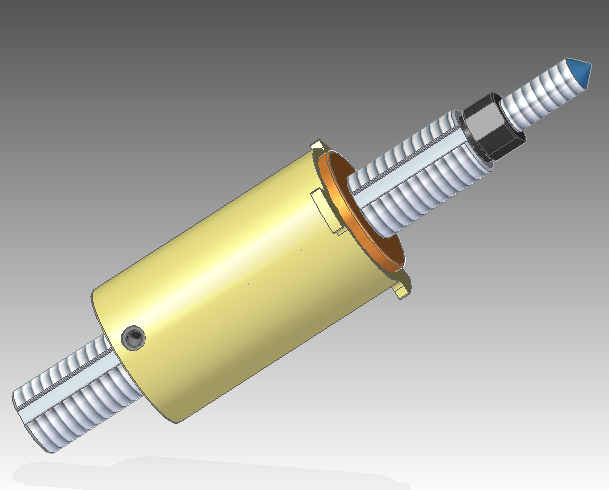
Hutchison Tool is excited to announce that the new stronger positive drive tap collet design, which is a standard feature in our new Model 3000, 3100, 6000 and 6100 units, is now available as a retrofit for older units.

New Stronger Collet Design

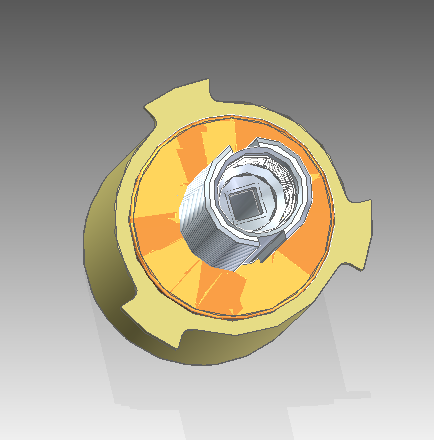
Positive Tap Drive


The positive drive tap collet design offers several advantages versus the old draw bar style collet. 


  • Positive drive of the tap square off of the meat of the lead screw instead of collet jaws.
  • Collet grips tap closer to work area
  • Only one collet required when using varying length lead screws


Thursday, December 19, 2013

In-die Tapping Reduces the Risk of Untapped Parts


One of the continuing concerns we hear from customers revolves around stamped parts being shipped to a customer without a tapped hole.   This risk can be minimized by using sensors in the tapping station to make sure the tap goes through the stamped part.  This simple and effective process greatly minimizes the risk of shipping untapped parts.

Now compare this with the risk of shipping untapped parts on a secondary operation.  Most secondary tapping operations have a lot of human interaction.  These repetitive types of operation can easily lead to operators skipping a tapped hole on parts with multiple tapped holes.  Low cost automation can eliminate some of the skipped hole problems.  But what about parts where the operator just plain forgets to load into the secondary tapping machine but the parts still wind up in the good part bin.


In-die tapping certainly reduces the cost of parts by eliminating a secondary tapping operation.  In addition, it can also be a tremendous cost saver and customer service winner by eliminating the risk of sending untapped parts to a customer.

Friday, November 15, 2013

Troubleshooting Tips When Breaking Taps

Tap breakage can be a frustrating experience, especially when it is hard to determine the cause of the breakage.  Over the years we have found four things to be the most common causes of tap breakage.

          1.  Incorrect Hole Size:  Hole sizes that are a few thousandths to
                   small can be the difference between success and failure-
                   especially roll forming taps.

          2.  Misalignment:  Taps hitting the hole off center

          3.  Improper Lubrication: Lack of lubrication often leads to poor 
                   tap life but can also lead to breakage.

          4.  Timing Issues:  Taps not getting out of the way of the advancing
                   strip.