Monday, September 21, 2015

Design Assistance and Review are Keys to Success for In-Die Tapping

Design Assistance/Review Key to Successful In-die Tapping


While In-die tapping heads are not difficult to incorporate into die designs, the limited amount of experience most die designers have with In-die tapping brings up several questions.  Our engineering team is always ready to assist your designers through the design process.  In addition, we use several tools including our Die Design Checklist as well as on line meetings via GoToMeeting.com to facilitate the design process.  Finally, we utilize GoToMeeting.com for a final die review of the tapping station with your design team to head off any issues ahead of cutting steel.   Hutchison Tool understands that the success our company can only be built on the success of our customers!


Wednesday, May 20, 2015

Tapping Today’s New Advanced High Strength Steels(AHSS)


The continuous drive for weight reduction in the automotive industry has led to a new generation of Advanced High Strength Steels (AHSS).    While these new steels offer the advantage of a stronger yet lighter steel, they also pose production challenges.  Metalforming Magazine’s May cover story “Understanding the New, Stronger Automotive Steels” is a very informative article about such advantages and challenges of working with AHSS.

Tapping AHSS
The tool life challenges metal stampers face when forming AHSS are the same for tapping it.  Tap material and cutting speeds are two vital variables in determining tapping success. Hutchison Tool recommends using taps made from harder tooling material to reduce tap wear when working with these new steels. The expansion of cutting tool materials (HSCO and PM materials) and coatings available will provide longer lasting tool life when tapping AHSS. 

For optimal tapping the cutting speeds (SFM) used for Advanced High Strength Steels should be in the 2/3 range of the tapping speeds for 1008-1010 material. Hutchison Tool can assist you in determining the best tap and appropriate cutting speed for all your tapping applications.


As always, we welcome the opportunity to work with you on your tapping applications.  Please contact us at 800-332-3230 or you can e-mail at sales@hutchisontool.com.

Tuesday, April 21, 2015

Reduce Part Weight by Extruding and Tapping


Corporate Average Fuel Economy (CAFE) Standards are becoming more stringent every year requiring a constant drive to improve fuel economy any way possible.  Among the most popular ways of improving fuel economy is weight reduction. 

How can extruding and tapping lead to weight reduction?  
When a threaded hole is required in stamped parts the two most common processes are extruding & tapping and adding weld nuts. Anytime something is added to a part weight is added.  While the minute weight of one weld nut may seem insignificant, add up all weld nuts throughout a vehicle the sum total can become a real weight savings.

There are factors to consider when looking at extruded/tapped holes v. weld nuts including number of threads required and pull test requirements.  If a weld nut is not spec’d as necessary then extrusion & tapping is the best alternative for reducing the weight of a part.

Of course, the most economical way of tapping extruded holes in stamped parts is In-die Tapping.  Hutchison Tool Sales is the in-die tapping industry expert and welcomes the opportunity to collaborate with you on reducing your manufacturing costs and supplying your customers with lighter parts. Contact us today 800-332-3230.


Thursday, March 26, 2015

In-Die Tapping Solutions Delivered Quick!


QUICK 2-3 Week delivery of Standard tapping units!


QUICK 4-6 Week delivery of Multi-Spindle and special units!


QUICK 1 Day Shipping of most standard parts!


$72,376.14 of Parts in Stock

QUICK Tapping Tidbit—Just like our deliveries!

Monday, February 16, 2015

Preventative Maintenance Program

In-die Tapping Preventive Maintenance Program
2 year/2 million strokes

Most of the time, the high pressure production environment of metal stamping facilities does not allow for unscheduled down time of dies.  The best way for you to stay ahead of these unanticipated break downs is by having a proactive preventative maintenance program.  That is why Hutchison Tool has put together a preventative maintenance program to help maximize the uptime of your In-die tapping unit.

How often should the PM be done?  
You should consider a PM every 2 years or 2 million strokes

How does it work?
Contact Hutchison Tool to schedule an appointment with our service department that fits into your production schedule to eliminate possible production delays.  Once an appointment is scheduled, you can ship the unit to our plant.

How long does it take?
Most maintenance can be performed in a week.  In some cases, expedited requirements could be handled in just a few days.


What is done to the units?
Each unit is disassembled and each component is inspected for wear.   Each unit will have a report on items that are recommended for replacement.   After any required repairs are completed, each unit is cleaned, repacked with grease and reassembled ready to be put back into service.

What is the cost?
The model 3000 and 3100 have an inspection charge of $400.00 and the model 6000 and 6100 have an inspection charge of $650.00.  In addition to these charges, any parts that are recommended for replacement would be charged as well.  No parts will be replaced without prior authorization from the customer.  Most units generally would require the bearings replaced and some bushings.   Total maintenance including inspection, bearing and bushing replacements usually costs approximately $ 1200.00  for 3000 series models,                                      
$ 2000.00 for 6000 series models, $ 1500.00 for 3100 series models and $ 2200.00 for 6100 series models.  These estimates are based on single spindle units.  Multi-spindle and other special units will generally be higher.

What’s the next step?
Contact Hutchison Tool at 800-332-3230 or e-mail us at sales@hutchisontool.com to schedule an appointment to send the tapping unit to our factory.


Friday, January 16, 2015

Increasing Production of In-die Tapping Operation with Servo Press

Increasing Production of In-Die Tapping Operation

How much faster can a servo press run an In-die tapping application than with a traditional mechanical press using the following traditional process requirements?

Press:  10" stroke (Box B14)
Tap size:  M8 x 1.25 
Material:  1008-1010
Part thickness:  Extruded hole with tap length of .250"(Box B8)
Production Speed:  38 SPM (Box B169)
Press stroke used for tapping:  5.30" (Box B98)
Gear Ratio:  1.9:1(Box B98)

Having to use a full press cycle on a traditional mechanical press, 4.70" of press stroke is used for feeding the strip into progression.  However, using a servo press’s pendulum (half) motion http://youtu.be/i7wSG5UHJec, we can eliminate any unused stroke length and gain increased production rates without having to change current process specifications.

In this scenario, only 1.5” of stroke length is necessary to advance the strip into progression.
Combine this with the 5.30” required for tapping, our necessary stroke length is 6.80”.  By removing the 3.2” of stroke, we will increase production rates from 38spm to 54 spm.

Figure 1
Here’s how. 
A test was performed on a SEYI SD1-220T direct drive servo press with a maximum stroke length (TDC) of 9.84”.  In Pendulum (Half) mode, we can virtually re-adjust TDC to meet the required process stroke of 6.80” or 173mm:  This re-adjusted stroke is programmed into the pendulum (Half) motion profile as setpoint “P1” (see figure 1). 

When the press is engaged, we descend from TDC (250 mm/9.84”) to P1 (143mm/6.8”) at 50 spm (rated max press spm).  P1 is set to 173mm (6.81”) above BDC.  We then descend from P1 (173mm) to P2 (135 mm) at 50 spm.  The distance between P1 and P2 is the 1.5” that we need for the feed progression.  We want to use 50spm between these two pints in order to save as much time as possible.  At P2 (135mm/5.3”), our tapping begins.  We slow the press speed down to 38spm to match the process requirements. We carry this through to bottom dead center (P3), and then back up to P4 at the same rate.  From P4 back up to P1, we increase the speed back to the rated 50 spm.  Note that “0” is used instead of programming 50. The controller software knows that, upon ramp-up, if a 0 is used, it means maximum press spm.  You could just as easily program 50 spm and get the same result.

Figure 2 shows indicates the forming curve and at what points the feed progression and tapping occur.
Figure 2

To see the video of new adjusted output, go here. http://youtu.be/_ALcszI7SU8


Monday, November 17, 2014

New Tapped Hole Size App

We often get requests for the appropriate hole sizes for taps.  While we have a rollform tap hole size chart in the In die tapping resources section of our website, there is a new downloadable app that takes this information to the next level.   North American Tool Corporation has developed a Thread Tap App that can be downloaded to any Apple, Android, Kindle or desktop device.  In addition to hole size information for both cutting and rollform taps, they also give general recommendations for torque and horse power requirements for tapping along with a myriad of other good technical information about taps and tapping.


The app can be downloaded by visiting North American Tool’s website at www.natool.com.   Click on the Mobile Apps button and choose the app for your appropriate operating system.  If you have any additional technical questions or need to order taps please contact us at 800-332-3230.

Tuesday, September 23, 2014

Tap Change for Hutchison Tool In-die Tapping Units


Tap Change for Hutchison Tool In-die Tapping Units

We often hear that a picture is worth a thousand words.  Enclosed is an educational/training video as to how to change taps and set tap depth height in the Hutchison In-die Tapping Units.  This would be an excellent video to share with your toolroom people, setup personnel and press operators.  Please contact us at info@hutchisontool.com for more information.

Tuesday, September 9, 2014

Tapping Head Temperatures

In-die Tapping Head Operating Temperatures

As a general rule, most In-die tapping heads run at high production speeds.  In some cases the production speeds can reach up to 200 strokes per minute.  These higher production speeds leads to heat which often brings up questions about how hot the In-die tapping heads can get while in production. 


Normal bearing operating temperatures can range from 80-150F degrees but are rated up to 220F degrees.   Bearing temperatures normally run hotter at start up and right after re-lubrication because excess grease causes friction and drag in the bearing.  Temperature spikes of 50F degrees at start up and 30F degrees after re-lubrication are common.  With all this information our recommendations are not to exceed 170F degrees during continual operation but understanding that there may be spikes up to 200F degrees at startup or re-lubrication. 

Friday, August 8, 2014

New Horizontal In-die Tapping Head

New Horizontal In-die Tapping Head

The overwhelming majority of In-die tapping applications are best suited to be tapped with the tap coming down vertically and tapping the strip in the flat position.   What happens when a hole cannot be tapped in the flat due to concerns of hole distortion after forming or maintaining a hole location after parts are formed?  In the past these would be applications that could not be tapped in the press and would have to go to a costly secondary tapping operation.

The new HTS Model 6300 Horizontal tapping head now allows for tapping of parts in the press that were formerly not possible.   The new HTS Model 6300 is designed specifically to each individual application due to the unique nature of each horizontal tapping application.  Please contact us with your application and we can provide recommendations and technical specifications.

As always, we look forward to hearing from you regarding your In-die tapping, secondary tapping or other tapping applications.  Please contact us at 800-332-3230 or e-mail us at sales@hutchisontool.com

Thursday, July 3, 2014

Quick Change Tap Positioning in Press

The most popular feature of our In-die tapping heads is the ability to quickly change taps in the press in under a minute.  It is important when changing taps in the press to change taps consistently at the same ram position in order to maintain the correct tap timing.  We recommend changing the taps when the press is always at top dead center.  This allows for the maximum opening in the press to access the quick change pitch assembly as well as providing a consistent starting position for tap change.


Tuesday, May 27, 2014

Visual Thread Inspection of Form Threads

Visual Thread Inspection of Form Threads

When using form thread taps it is important to be aware that form threads visually have a slightly different look than a cut thread.  All formed threads have a cup or “U” in the crest due to the nature of the thread forming process.  A properly sized hole should result in a thread percentage of 65-75%.  Tapping with too small of a pre-tap hole size results in excessive tapping torque, tap wear and possible tap breakage.   Enclosed is a link on our website to a tapped hole size guide for rollform taps. (http://www.hutchisontool.com/pdf/tapped_hole_size_guide.pdf)


Thursday, April 24, 2014

Extruding and Tapping v. Weld Nuts

Extruding and Tapping v. Weld Nuts

In the never ending quest to reduce manufacturing costs, manufacturers need to weigh function v. cost in most engineering applications.  The use of an extruded and tapped hole v. weld nuts is one of these decisions.   While a weld nut generally will have a slightly stronger thread than an extruded and tapped hole, is the stronger thread required in every application?  Are we adding extra cost of a weld nut when a stronger thread is over kill?
The costs associated with an extruded and tapped hole can be limited when utilizing In-die tapping.  The costs associated would be the cost of the tapping head, an extra station in the die for the tapping head and some additional die design costs.

The costs for weld nuts include nut insertion equipment, die space for the nut insertion equipment, additional die design costs, weld nuts, storage for the weld nuts and nut insertion equipment when not in use and press downtime when loading a new coil of weld nuts.  This generally leads to more press down time compared to a tapping die.  Both In-die tapping and weld nut insertion can run at comparable press speeds.  The end result is parts utilizing In-die tapping v. weld nuts are far more competitive on a per piece basis.

Thursday, March 13, 2014

Pilot Locator Guide System

The HTS Follow Along style tapping units offer many advantages when In-die tapping.  Two of which are increased production speed and elimination of longer stripper travel normally associated with standard tapping units.  These advantages are derived by starting the tapping process before the strip is down on die level requiring feeders to be accurate to avoid tap breakage from misaligned feed progression.

Misalignment with modern feeders usually is not an issue due their accuracy; however, there are times when it is advantageous to assure correct strip alignment with a physical pilot.  Complex forms on a part or heavier strip applications are a couple such instances.  It is for these applications that we introduce our new Pilot Locator Guide System.  This system pneumatically advances pilots into the strip before the tap enters to insure the tap is aligned with the hole to be tapped.  The Pilot System is mounted in the tapping station below the tapping head in order to assure correct alignment and movement with the strip as it moves to die level.


Wednesday, February 19, 2014

Avoid Shipping Untapped Parts to Your Customer While Improving Lubrication in One Package

One of the biggest concerns facing metal stampers when shipping parts with tapped holes is the fear that a part will be shipped to a customer without a tapped hole.  This can lead to costly penalties and expensive sorting and inspection of entire lots or shipments.  In order to avoid these costly headaches, Hutchison Tool supplies tap sensors that are mounted in the tapping station in the die.  By mounting the tap sensor underneath the strip in the tapping station, the tap must pass completely through the tapped hole in order for it to positively activate the sensor.  If there is no activation of the sensor, the press will shut down and stop any untapped parts from getting through the die.


As an added bonus, the tap sensors allow for through the sensor lubrication for added lubrication of taps for tougher applications such as large diameter taps or harder materials.  This extra lubrication from the bottom of the strip has proven to be quite helpful for increased tap life.

To learn more visit us on our website at www.hutchisontool.com or visit our Facebook page  at www.facebook.com/hutchisontool


Monday, January 20, 2014

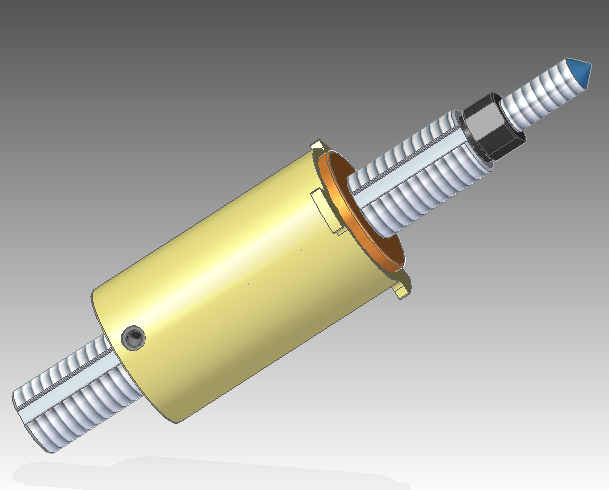
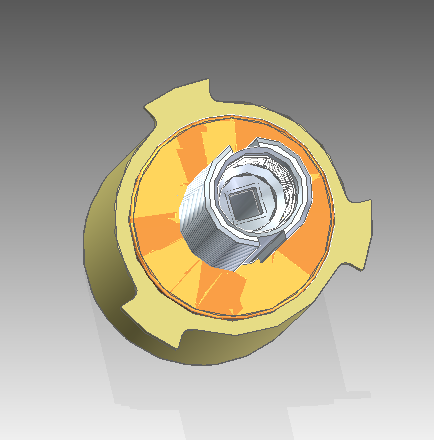
New Stronger Positive Drive Tap Collet Design

Hutchison Tool is excited to announce that the new stronger positive drive tap collet design, which is a standard feature in our new Model 3000, 3100, 6000 and 6100 units, is now available as a retrofit for older units.

New Stronger Collet Design

Positive Tap Drive


The positive drive tap collet design offers several advantages versus the old draw bar style collet. 


  • Positive drive of the tap square off of the meat of the lead screw instead of collet jaws.
  • Collet grips tap closer to work area
  • Only one collet required when using varying length lead screws


Thursday, December 19, 2013

In-die Tapping Reduces the Risk of Untapped Parts


One of the continuing concerns we hear from customers revolves around stamped parts being shipped to a customer without a tapped hole.   This risk can be minimized by using sensors in the tapping station to make sure the tap goes through the stamped part.  This simple and effective process greatly minimizes the risk of shipping untapped parts.

Now compare this with the risk of shipping untapped parts on a secondary operation.  Most secondary tapping operations have a lot of human interaction.  These repetitive types of operation can easily lead to operators skipping a tapped hole on parts with multiple tapped holes.  Low cost automation can eliminate some of the skipped hole problems.  But what about parts where the operator just plain forgets to load into the secondary tapping machine but the parts still wind up in the good part bin.


In-die tapping certainly reduces the cost of parts by eliminating a secondary tapping operation.  In addition, it can also be a tremendous cost saver and customer service winner by eliminating the risk of sending untapped parts to a customer.

Friday, November 15, 2013

Troubleshooting Tips When Breaking Taps

Tap breakage can be a frustrating experience, especially when it is hard to determine the cause of the breakage.  Over the years we have found four things to be the most common causes of tap breakage.

          1.  Incorrect Hole Size:  Hole sizes that are a few thousandths to
                   small can be the difference between success and failure-
                   especially roll forming taps.

          2.  Misalignment:  Taps hitting the hole off center

          3.  Improper Lubrication: Lack of lubrication often leads to poor 
                   tap life but can also lead to breakage.

          4.  Timing Issues:  Taps not getting out of the way of the advancing
                   strip.


Wednesday, October 2, 2013

Follow Along In-die Tapping Head Die Design Video

The expression that a picture is worth a thousand words is now being replaced by video is worth a thousand words.   Hutchison Tool is happy to introduce our latest instructional video for design characteristics of a die utilizing our follow along In-die tapping heads.  The video can be viewed under the video tab on our website(www.hutchisontool.com).  It can also be viewed on our Youtube channel via this link(http://youtu.be/EH143wec2T0)

Please contact us with any questions or comments you may have on the video as well as any design questions that you may have.